

When I'm standing behind my table at a market, watching people slow down and read the word “Sri Lankan,” there's one question I can almost set my watch by. Someone picks up a kit, turns it over, and asks: “So… is this like Indian?”
I love that very honest question. Most people in the UK have grown up with a takeaway menu as their food map of South Asia, and Sri Lanka isn't on it for everyone. So they reach for the nearest landmark they know. “Is it like a korma or a butter chicken or like a vindaloo?” to explain the levels of heat and sweetness of the curry. The honest answer is there isn't really a way to compare the two. Not because Sri Lankan food is better or more complicated, but because it grew up somewhere else, from a different kitchen, a different coastline and a different history.
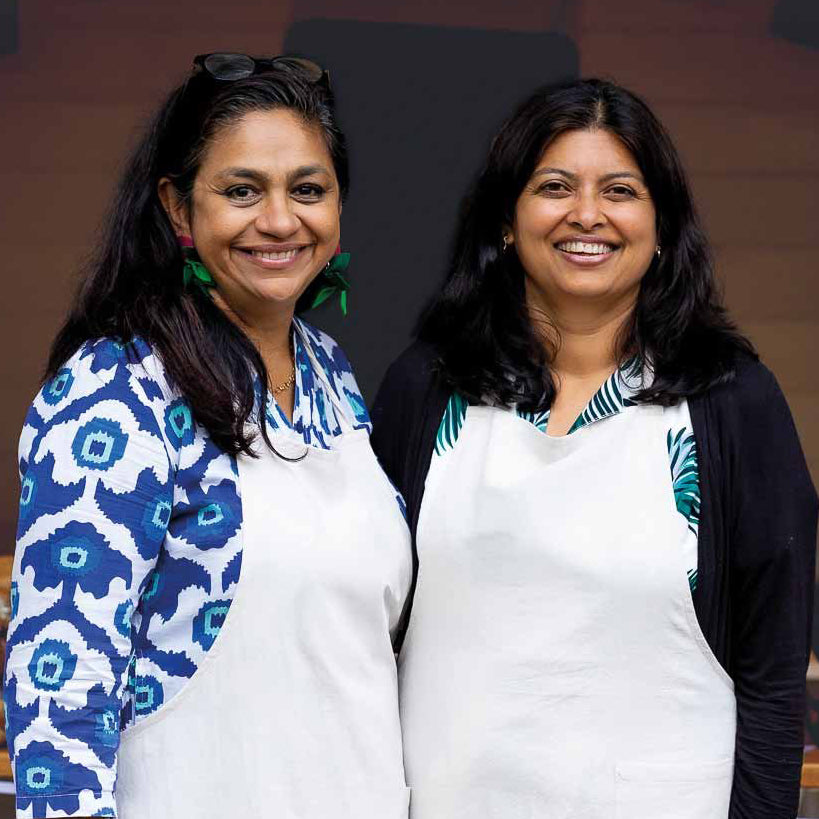
When we first started making these kits at my kitchen table in Kent, the whole point was to give people a way to taste that difference for themselves — because explaining it never quite lands. Tasting it always does. So let me try to do in words what I usually do with a spoon.
It starts with coconut, not tomato or cream
If you picture a classic Indian restaurant curry, you're often picturing a base built from onions, tomatoes, and sometimes cream or yoghurt — rich, thick, sometimes a little sweet. Sri Lankan curry rarely works that way. Our base is coconut milk. It's an island, and coconut grows everywhere, so it ends up in almost everything: the curry, the sambol, the roti. That single swap changes the entire character of the dish. Instead of a heavy, clingy sauce, you get something lighter and looser that coats the rice rather than smothering it. It's fragrant and it carries spice in a completely different way — the heat arrives, then the coconut rounds it off.

The spices are roasted — and that's the secret
This is the part people genuinely can't believe until they smell it. In a lot of Indian cooking, the curry powder is built from ground spices that are warm and bright. In Sri Lanka, we roast the spices first in their full form — coriander, cumin, fennel, often until they're dark — before grinding them. That's what makes a Sri Lankan roasted curry powder so deep, smoky and almost chocolatey in colour.

It's the difference between a yellow curry and a dark, mahogany one.
When someone tells me my chicken curry doesn't look like the curry they expected, that roasting is exactly why. It's not a shortcut or an accident; it's the whole personality of the dish.
Goraka: the ingredient that has no Indian equivalent
Here's where I usually lose people in the best possible way. Sri Lankan cooking uses an ingredient called 'goraka' (garcinia cambogia sometimes called Malabar tamarind), a small dried fruit that brings a sour, almost smoky tang to fish and meat curries.
There's nothing quite like it on a UK shelf, and there's no neat Indian counterpart to point to either. Where an Indian curry might reach for tomato or tamarind for acidity, a Sri Lankan one reaches for goraka. It's part of why our mustard fish and Pepper pork curries taste so distinct — that low, savoury sourness sitting underneath the heat.
It's also a perfect example of why “is it like Indian?” is so hard to answer: the building blocks themselves are different.
THE MARKET STALL ANSWER When people ask me “is this a korma, butter chicken or vindaloo?” I've stopped trying to find the closest match. Now I just say: it isn't a version of anything you've had. It's its own thing — and that's exactly why it's worth trying.
An island history you can taste
Sri Lanka sat on the old spice routes for centuries, traded over by the Portuguese, Dutch and British, all while keeping its own deeply rooted home cooking.
So the food carries layers: Malay influence here, a Dutch-era technique there, but always anchored in island ingredients — coconut, pandan, curry leaves, cinnamon (real Ceylon cinnamon, which actually comes from Sri Lanka).
Indian cuisine is vast and regional and magnificent in its own right. The point was never that one is better. It's that they're cousins, not twins. They share an alphabet of spices but they write completely different sentences with it.
So what does it actually taste like?
Lighter than you'd expect from the colour. Fragrant from the coconut and curry leaves. A heat that builds rather than slaps. A savoury sourness from goraka that you won't be able to name but won't forget. And a roasted depth that makes people go quiet for a second and then ask for the recipe.

The honest truth: you have to taste it!
I can write a thousand words about coconut and goraka and roasted spices, and I have. But the reason I started making these kits is that no amount of explaining at a market does what one mouthful does. People come back to my table the week after a tasting and say, “I get it now — it really isn't Indian, is it?” That's the whole idea behind a Little Big Flavour Kit. Every kit gives you the pre-measured whole spices, the roasted Sri Lankan curry powder, the coconut milk powder and a recipe card so you can cook the real thing from scratch in about half an hour. No jar sauces, no additives, no guesswork.
The spices come from small family farms in Sri Lanka, the same ones I trust to get it right, picked packed and dried for us. You don't need to know goraka from cardamom to make it work. You just follow the card, and somewhere around the moment the kitchen starts to smell of roasted curry powder and coconut, you'll understand the difference better than any blog post could teach you. Taste the difference for yourself If you've only ever known South Asian food through an Indian takeaway, our Chicken Curry Kit is the easiest place to start — it's our bestseller for a reason.
Feeling braver? The Mustard Fish and Pepper Pork kits show off our flavours to the best (in my very humble opinion).
Browse the full range and cook your first proper Sri Lankan curry this week.
Aliza x