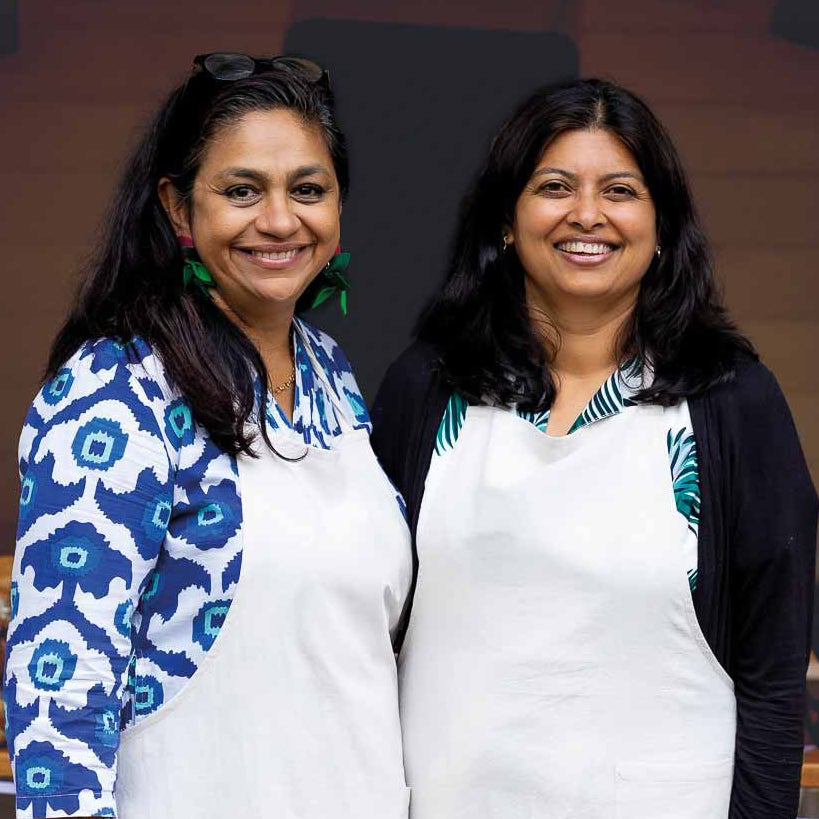


I was so glad to be part of the From Homeland to New Land – How Recipes Transform panel at the University of Greenwich’s Global Majority Alumni Community Cultural Festival. I was afforded the opportunity via @women_in_food_industry run by the brilliant Mex Ibrahim, who works tirelessly to champion women across the food industry and make sure opportunities like this reach the right people. Thank you, Mex, for putting it on my radar.
I shared the table with Radhika Howarth (@radikalkitchen) and Monique Dotsey (@imperfectyetyummy) and James Wong, with Yvette Fofah guiding the conversation. We all came from different places and experiences, but we recognised so much in one another’s stories.
James spoke about his Malaysian and Hong Kong background and growing up in his family’s Chinese restaurant. He described how dishes such as sweet and sour changed when they reached Britain—the version we know here is not necessarily something you would find back home. What stayed with me was how hard his father worked to preserve traditional ways of cooking, and how deeply that has shaped James as a chef.
When we were asked what had been difficult to recreate after moving countries, Monique talked about grinding stones and the time involved in older cooking methods. She is comfortable replacing some things with modern shortcuts that make life easier—but she draws the line at jars of ginger and garlic paste. She prepares and freezes her own.
I loved that because it showed that we all have our own line. There are layers to what we are prepared to change. Preserving our food does not necessarily mean reproducing every movement our grandmothers made. Sometimes it means protecting a particular taste or technique while allowing the rest of the recipe to fit the life we live now.
For Monique, teaching children the original version of a dish matters, but so does helping them recognise and carry its flavours forward. Recipes are not meant to be trapped in time. Each generation changes something, whether through necessity, taste, new ingredients or simply having less time.
Radhika spoke about recipes travelling and being adopted by new communities. Once people are genuinely cooking, sharing and changing a dish—not simply leaving it untouched in a cookbook—it has begun another part of its life. She also talked about “curry” becoming a broad British term for foods that were far more varied and specific. She has a brilliant cook book out called Flavours without boarders. Its on my purchase list.

That made me think about how enormous the word curry has become. Malaysian curry, Singaporean curry, Japanese katsu curry, Sri Lankan curry and the many regional Indian curries can be completely different in flavour, ingredients and history. Calling them all curry may be convenient, but understanding where each one comes from opens up a more nuanced story...
Perhaps learning how food travels can stretch our thinking more generally. Migration does not simply replace one culture with another. It creates exchange, memory, adaptation and new forms of belonging.
The recipes might change but our connection to the food and the place we come from remain.

I was also joined by some very special people. My cousin Eka on the left, Chamalka who lives in South London and raises a family while juggling life and who is an exceptional cook, Nirosha, who was my ride or die when I lived in Sri Lanka also is an amazing cook. (She taught me how to make her crab curry, which I’ll be sharing in my next blog post). And finally my sister Sarah who is, as always, my biggest champion and sanity check!